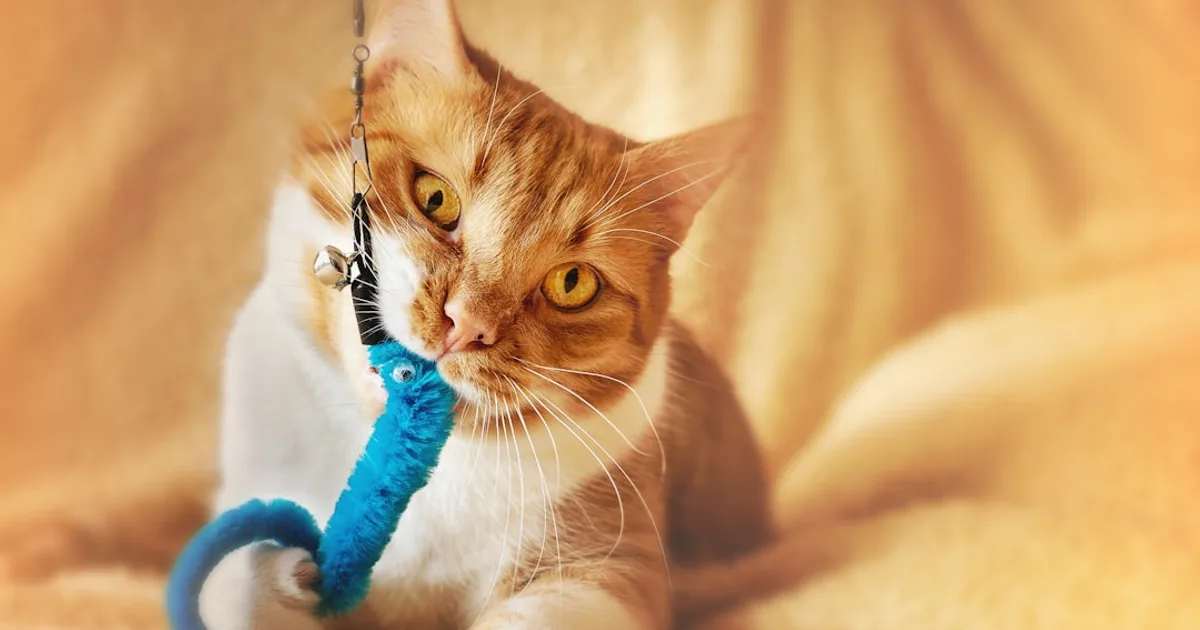
Cats sleep between twelve and sixteen hours a day, which makes the "bored cat while you're at work" problem sound like a non-issue. It isn't. The hours cats are awake are when the damage happens — the scratched sofa, the knocked-over houseplants, the mysterious 3am energy sprint that woke the neighbours. A cat that has no outlet for hunting behaviour during waking hours will find one, and it won't always be one you chose.
The goal isn't to entertain your cat continuously. It's to provide enough environmental enrichment that their natural instincts — hunt, stalk, pounce, explore — have somewhere to go.
What cats actually need from toys
A toy that gets batted once and ignored isn't enrichment. What cats need is novelty, unpredictability, and something that triggers the hunting sequence: stalk, pounce, catch, kill. Toys that move erratically, make sounds, or can be "caught" and carried satisfy this sequence. Toys that just sit there don't.
This is why most of the toys in the average cat's toy basket go untouched after the first day. They were interesting once. Now they're known quantities. Rotation is the answer — putting toys away and reintroducing them after a week or two restores novelty without buying new things constantly.
Puzzle feeders and food toys
The single most effective enrichment tool for a cat left alone during the day is a puzzle feeder — especially if you're still feeding some dry food alongside wet meals. Instead of putting food in a bowl where it disappears in thirty seconds, you put it in a device that requires the cat to work for it. Sniffing out hidden kibble, batting pieces out of a feeder, pawing food through a maze — these activities engage hunting instincts, slow eating, and occupy time.
A simple start: hide small amounts of dry food in three or four locations around the house before you leave. Under a rug, on a shelf, inside a cardboard box, in a paper bag with the top folded over. The cat spends time sniffing and finding rather than eating in one spot and being done.
Commercial puzzle feeders range from simple plastic rollers that dispense kibble as the cat bats them to complex multi-level boards with different types of challenges. Start simple — an overly complex puzzle for a cat that hasn't done this before produces frustration rather than engagement. The LickiMat (a rubber mat with grooves where you spread wet food or paste) is low-tech and genuinely occupying — cats can spend fifteen to twenty minutes working a LickiMat clean.
Rotate puzzle feeders the same way you rotate toys. The novelty of figuring out a new type is part of the enrichment.
Automated and battery-powered toys
Electronic toys that move unpredictably are more engaging than static ones for the simple reason that unpredictable movement better mimics prey. The rotating feather wand on a timer, the motorised mouse that darts under a felt mat, the laser dot that runs in random patterns — these trigger hunting behaviour more reliably than anything static.
Automatic wand toys with a timer function are worth the investment for a working owner. Set them to run for fifteen minutes a few times during the day and the cat gets interactive play sessions without you being present. The OurPets or PetFusion versions are reasonably durable. The cheap versions break within weeks — buy once.
The Hexbug mouse (a small robotic toy that vibrates and moves erratically) is effective for cats that respond to movement-based toys. It's unpredictable enough to maintain interest longer than most battery toys.
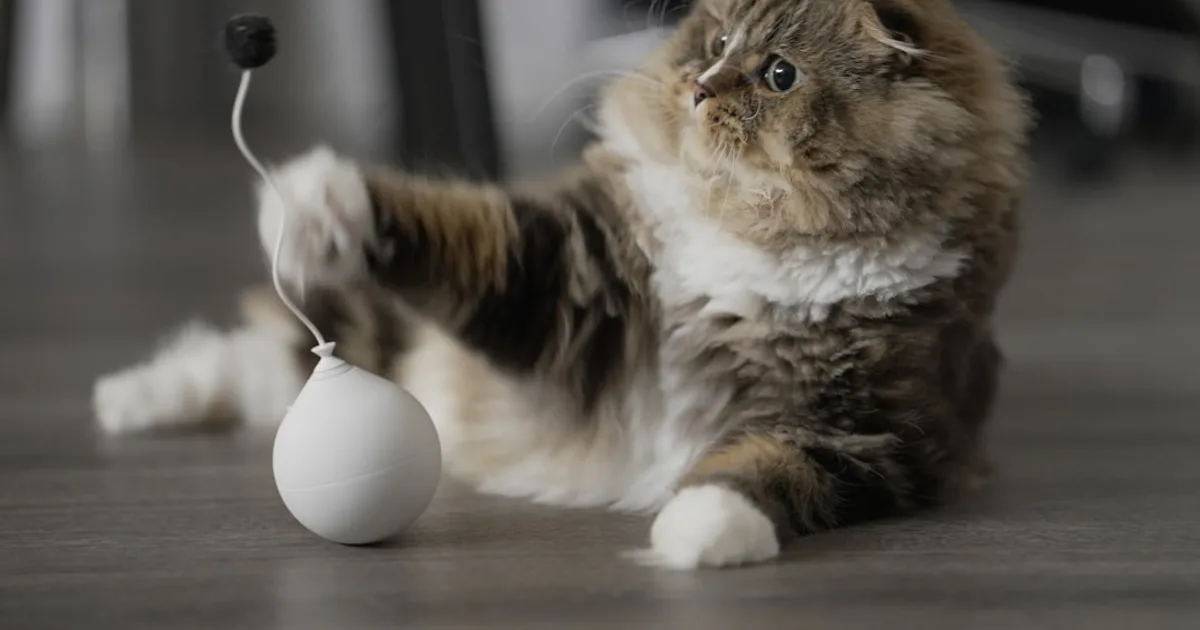
Laser toys on automatic rotation divide opinion. Some cats love them; others find the laser frustrating because there's nothing to actually catch at the end of the hunt sequence. If you use a laser toy, end the session by directing the dot to a physical toy the cat can pounce on and "catch" — this completes the hunting sequence and reduces the frustration that laser-only play can produce.
Battery toys have one universal problem: batteries die and cats learn this quickly. A toy that moved yesterday and doesn't move today is just furniture. Check them regularly.
Window entertainment
The view from a window is free enrichment that many owners underuse. A cat that can watch birds, squirrels, passing people, and outdoor activity has a television that runs on content it finds genuinely interesting.
A window perch — a padded shelf that attaches to a windowsill — costs very little and is used consistently by most cats once installed. Position it at a window with activity outside. A bird feeder placed where a cat can watch it from inside is one of the more effective enrichment setups you can create for almost no money — a small garden project visible from the window works just as well.
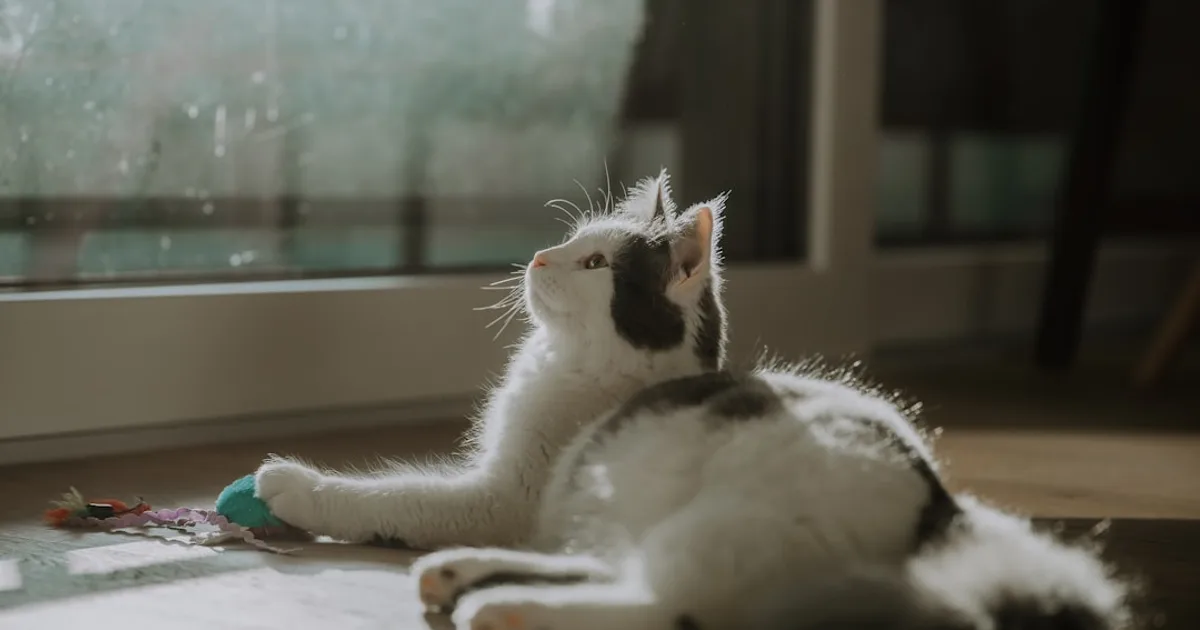
If the window looks out onto a blank wall or an interior courtyard with nothing happening, it's less effective. The window that works is the one with something to watch.
Cardboard boxes and paper bags
Dismissing these as too basic is a mistake. Cats are drawn to enclosed spaces, to crinkly textures, and to anything that can be an ambush point. A cardboard box with a hole cut in the side, a paper bag with the handles removed (handles are a strangulation risk), a tunnel made from multiple boxes — these cost nothing and provide the kind of exploratory and hiding behaviour that indoor cats don't get enough of.
Leave a new cardboard box out when you leave for work. By the time you come home it will have been thoroughly investigated, sat in, and probably shredded at the edges. That's the point.
The cat tree and vertical space
Vertical space is enrichment in itself. Cats feel more secure when they can be above ground level — it's a deeply instinctive response to being a small predator that is also prey for larger animals. A home where the cat can only be at floor level is a home that doesn't meet one of their basic environmental needs.
A cat tree with multiple levels, a scratching post component, and a high perch near a window is one of the best investments for an indoor cat's wellbeing — and pairs well with litter box setup in a dedicated room for new arrivals. It provides a place to scratch (redirecting from furniture), a place to observe from height, a place to sleep that feels safe, and a place to play. It doesn't need to be expensive — a solid, stable structure at a reasonable price point is better than an elaborate expensive one that wobbles.
What actually makes the difference
Toys matter less than the variety and rotation of them. A cat with ten toys available all the time becomes bored. The same cat with three toys available, rotated weekly, stays more engaged.
The most impactful changes for a cat left alone during the day: puzzle feeders instead of bowls, a window perch with something to watch, a cat tree or shelving that creates vertical space, and one or two automated toys on a timer. None of this is expensive. All of it is more effective than a pile of static toys that stopped being interesting the day after you bought them.
And the thing that replaces all of it most effectively: a second cat — provided you've done a proper pet introduction first. Two cats keep each other company, play together, groom each other, and sleep in a pile. The household management is marginally more complex. The enrichment they provide each other is not something any toy replicates.


