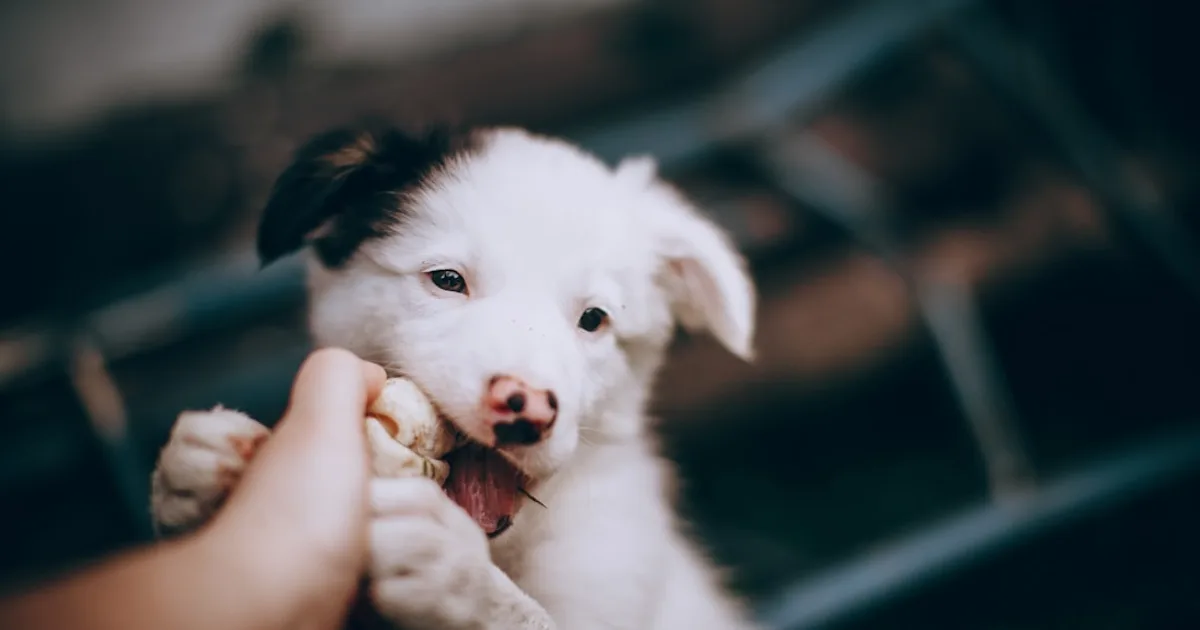
Puppy biting feels alarming the first time those needle-sharp teeth connect with skin, but it's one of the most normal and universal puppy behaviours there is. Puppies explore the world through their mouths the way human babies explore through touch. They also use their mouths to play with littermates, and a puppy taken from its litter at eight weeks hasn't yet finished learning the lessons its siblings would have taught it about how hard is too hard.
That's actually useful information, because it tells you what's happening: this isn't aggression, and it isn't a puppy that's going to grow into a dangerous dog. It's an undeveloped skill — bite inhibition — that needs to be taught, usually by you, in the role its littermates would otherwise have played — and if you're bringing that puppy into a home with existing animals, a slow pet introduction matters just as much as the biting lessons.
Why puppies bite
Several things drive the behaviour simultaneously, and most puppies are doing all of them at once. Teething, which begins around three to four months, makes chewing and mouthing genuinely soothing for sore gums. Play — puppies play with their mouths the way they'd play with paws if they had hands, and biting during play is the default rather than the exception. Exploration, since mouthing objects and hands is how a puppy investigates texture and gathers information about its environment — the same oral curiosity that later shows up as grass eating on walks, usually without cause for concern. And overstimulation or overtiredness, where a puppy that's overexcited or overtired bites more, harder, and more persistently than one that's calm.
Recognising which of these is driving a specific biting episode changes what response actually helps. A teething puppy needs something appropriate to chew. An overtired puppy needs a nap, not more correction. A puppy in an overstimulated play spiral needs the energy brought down before any training has a chance of landing.
Bite inhibition: the actual goal
The objective isn't to stop a puppy from ever putting its mouth on anything — those teeth are coming whether you like it or not. The real goal is bite inhibition: teaching the puppy to control the force of its mouth so that, as an adult dog, a moment of fear, pain, or excitement doesn't result in a bite hard enough to cause real injury.
This is taught the same way littermates teach it. When puppies play together and one bites too hard, the other yelps, stops playing, and walks away. The biter learns that hard bites end the fun. You can replicate this directly.
When a puppy's teeth connect with your skin too hard, let out a sharp, high-pitched "ow!" or "ouch!" — sudden and a bit theatrical works better than a stern voice. Immediately stop all interaction: pull your hand away, stand up, turn your back, or simply stop engaging for 10 to 20 seconds. The puppy learns that biting hard makes the fun and the attention stop immediately.
This needs repetition. A puppy doesn't learn from one yelp and one withdrawal. Over days and weeks of consistent response, the lesson accumulates, and most puppies show real improvement within two to four weeks of consistent handling.
Redirect to appropriate chewing
Saying no to a behaviour without offering an alternative leaves a puppy with an unmet need and no acceptable way to meet it. The redirect is what actually changes the pattern.
Keep an appropriate chew toy within reach at all times, particularly during the play sessions when biting is most likely. The moment teeth land on skin or clothing, calmly remove your hand or the fabric and immediately offer the toy instead. Praise warmly when the puppy takes it. Over time the puppy starts to default to the toy because that's what's consistently rewarded.
Rotate two or three toys with different textures — a rope toy, a rubber chew, something with a bit of give for sore teething gums — rather than relying on a single one. Variety keeps the toys interesting enough to compete with your hand for the puppy's attention, which during the teething months is genuinely stiff competition.
What not to do
A handful of common responses make the problem worse rather than better, and it's worth knowing why before reaching for them in frustration.
Physical punishment — tapping the nose, holding the mouth shut, any kind of physical correction — doesn't teach bite inhibition. It teaches fear, which can produce a puppy that bites out of anxiety later, or one that becomes warier of hands generally. It also damages trust at exactly the developmental stage where trust is being built.
Wrestling roughly or encouraging a puppy to bite at hands "in fun" sends a directly contradictory message to everything else you're trying to teach. If hands are sometimes a toy and sometimes off-limits, the puppy has no consistent rule to learn.
Yelling or reacting with big, dramatic anger can actually increase biting in an excitable puppy, because it reads as more exciting play energy rather than a clear stop signal. The sharp yelp-and-withdraw method works because it mimics the very specific signal a littermate gives — not because it's loud.
Pulling your hand away quickly during a bite triggers a chase instinct in many puppies, making the bite harder and more frequent rather than less. Removing your hand calmly and slowly, after the yelp, avoids feeding that instinct.
Manage energy and tiredness
A puppy that's had a nap, had a play session, and is calm bites less than one that's wound up, overtired, or under-exercised — which is why matching breed to your lifestyle matters as much for a house as for a flat. Biting frequently spikes in the late afternoon and evening in young puppies — sometimes called the "witching hour" — which is usually a sign of accumulated tiredness and overstimulation rather than a training failure.
Building a predictable rhythm of play, training, and rest throughout the day — much like a morning routine that actually sticks for the humans in the household — reduces the overtired spirals where biting is hardest to manage and a puppy is least receptive to learning anything in the moment. If a puppy is biting persistently and nothing seems to be working, check whether it's simply overdue for a nap before assuming the training approach is wrong.
When to expect improvement
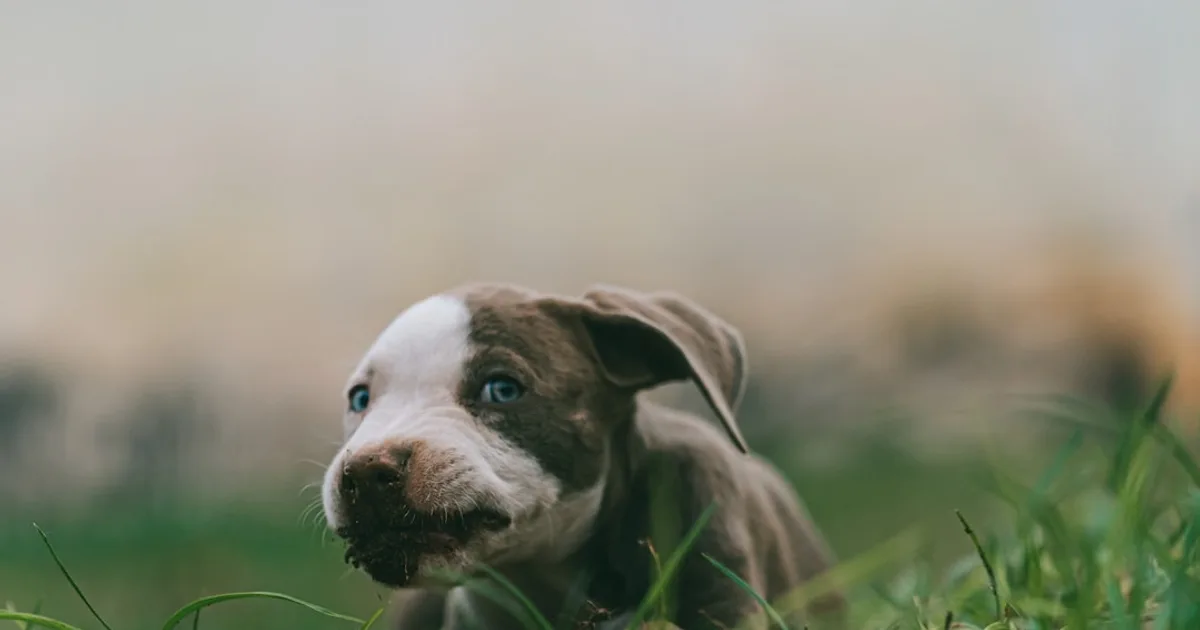
Most puppies show a noticeable reduction in biting frequency and intensity between four and six months, as the adult teeth finish coming in and the worst of the teething discomfort passes. Consistent bite inhibition training during this period matters because it's establishing a pattern that carries into adulthood — an adult dog with good bite inhibition, even in a moment of fear or pain, is far less likely to cause serious injury than one that was never taught to moderate the force of its mouth.
If biting is unusually hard, accompanied by growling and stiff body language rather than the loose, wiggly posture of play, or doesn't show any improvement after a couple of months of consistent handling, it's worth involving a qualified puppy trainer or behaviourist. That combination of signs is uncommon but is different from typical mouthy puppy behaviour and benefits from professional eyes rather than guesswork.
For the overwhelming majority of puppies, though, this is a developmental stage rather than a character trait — frustrating in the moment, temporary with consistent handling, and something nearly every puppy owner has navigated successfully before you.


