
Taking a long time to fall asleep every night feels like a personal failing — a broken relationship with sleep that other people don't seem to have. It usually isn't. For most people who struggle to fall asleep, the issue is environmental or behavioural rather than physiological. The conditions in which they're trying to sleep are working against their biology, and changing those conditions changes how quickly sleep comes.
The interventions below are not supplements, not sleep trackers, not expensive mattresses. They're changes to the conditions and behaviours around sleep that have reasonable evidence behind them.
The biology worth understanding
Sleep onset is largely governed by two systems. The circadian rhythm — your internal clock — creates a rising tide of sleepiness at a specific time each day based on when you typically sleep and when you expose yourself to light. The sleep pressure system — adenosine buildup — accumulates from the moment you wake up and peaks in the evening, creating the feeling of tiredness.
When both systems align — circadian sleepiness and high sleep pressure arriving at the same time — falling asleep is easy. When they're misaligned — you're trying to sleep before your circadian clock expects it, or you've disrupted the buildup of sleep pressure — falling asleep is hard regardless of how tired you feel.
Most sleep problems are misalignment problems. The interventions that work are almost all about realigning these systems.
Temperature
Core body temperature needs to drop by approximately 1°C for sleep onset to occur. This happens naturally in the evening as your circadian clock prepares for sleep, but the environment can either support or fight this process.
A bedroom that's too warm keeps core temperature elevated and delays sleep onset. The research-supported optimal bedroom temperature for sleep is around 18–19°C — cooler than most people keep their bedrooms, and worth factoring in alongside winter heating costs. If your room is regularly above 21°C and you struggle to fall asleep, this may be a significant contributing factor.
A warm bath or shower 60–90 minutes before bed paradoxically helps sleep by accelerating the body's cooling response. You heat up in the bath, step out into cooler air, and the rapid heat loss pulls core temperature down faster than it would drop on its own. This is one of the most replicated sleep findings and one of the cheapest interventions available.
Light and screens
The connection between screen use before bed and delayed sleep is real but more specific than most people realise. The issue is blue-spectrum light, which suppresses melatonin production. Phone and laptop screens emit significant blue light. Melatonin is the hormone that signals to your body that it's time to sleep.
The practical version: screens in the 60–90 minutes before sleep delay melatonin onset and push the body clock later. If you're using screens until the moment you try to sleep, your body is receiving a biological signal that it's still daytime.
Blue light filters and Night Shift modes on devices reduce but don't eliminate this effect. Complete screen removal before bed is more effective than filtered screen use — the same principle behind sensible screen limits for households with children. Reading a physical book, listening to a podcast, or other non-screen activities in the pre-sleep window are meaningfully different from screen use.
Bright overhead lighting has a similar effect to screens. Dimming lights in the evening — using lamps rather than ceiling lights, or just lowering brightness — signals the approach of night to the circadian system and supports the melatonin rise that facilitates sleep onset.
Consistency matters more than quantity
Irregular sleep timing is one of the most under-appreciated contributors to difficulty falling asleep. If you go to bed at 10pm on weekdays and 1am on weekends, your circadian clock is receiving contradictory signals and can't establish a reliable sleep window. Falling asleep becomes effortful rather than automatic.
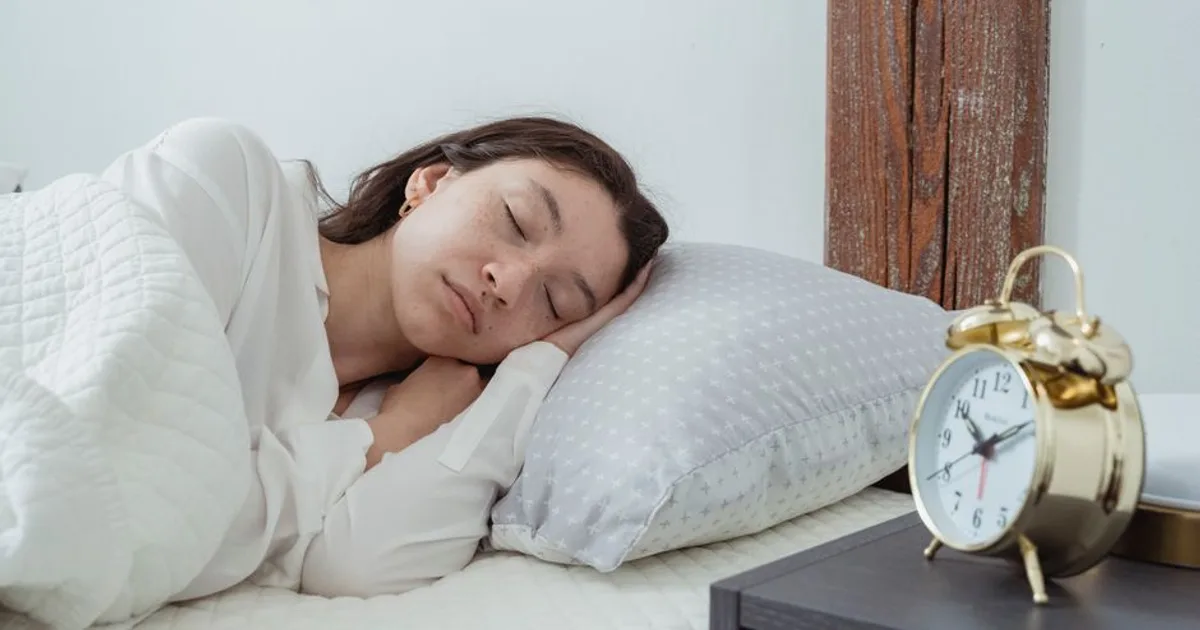
A consistent wake time — getting up at roughly the same time every day including weekends — is the single most powerful circadian anchor available. It's more important than a consistent bedtime, because you control when you wake up more reliably than when you fall asleep. A consistent wake time creates consistent sleep pressure buildup and consistent circadian timing, which together make falling asleep at a chosen time much easier over two to three weeks of consistency.
Caffeine timing
Caffeine has a half-life of approximately five to six hours in most people, with significant variation. A half-life of six hours means that half the caffeine in a coffee consumed at 3pm is still active at 9pm, and a quarter of it at 3am. For people who are sensitive to caffeine — which is individually variable and not reliably correlated with whether you feel the stimulant effect — afternoon coffee disrupts sleep onset even when it doesn't prevent you from falling asleep.
The standard recommendation is no caffeine after 2pm — which pairs well with a morning routine that front-loads coffee rather than stretching it into the afternoon. For caffeine-sensitive individuals or those with significant sleep onset problems, noon is a more conservative cutoff worth trying. This includes tea, cola, energy drinks, and dark chocolate in significant quantities.
Alcohol
Alcohol makes falling asleep easier and makes sleep worse. It's sedating, which aids sleep onset, but it disrupts the architecture of sleep — reducing REM sleep, causing fragmented sleep in the second half of the night, and producing an alerting rebound as it metabolises. The person who drinks to fall asleep more easily is trading sleep onset for sleep quality in a way that accumulates over time.
For falling asleep specifically: moderate alcohol consumption several hours before bed has less impact on sleep onset than alcohol close to bedtime. The sedation effect aids sleep onset; the metabolic rebound typically occurs in the second half of the night. Understanding this doesn't make alcohol a good sleep tool — it explains why its effects are variable and not wholly negative in the short term.
The cognitive interference problem
For many people who lie awake unable to sleep, the mechanism isn't physiological — it's a racing mind producing thoughts that are alerting rather than restful. Worrying about sleep, planning tomorrow, replaying today — these cognitive activities are incompatible with sleep onset regardless of how physically ready the body is.
The cognitive-behavioural approach: if you've been lying awake for more than 20 minutes, get up. Do something quiet and unstimulating — reading in dim light, gentle stretching — until you feel genuinely sleepy, then return to bed. This sounds counterproductive. It works by breaking the association between the bed and the frustrated, anxious experience of trying to sleep, which builds when you lie awake in bed regularly.
A written worry dump before bed — ten minutes of writing down everything on your mind, including what you need to do tomorrow — has reasonable evidence as a sleep aid. The act of writing externalises the thoughts and reduces the cognitive need to keep cycling through them. It's not a substitute for addressing the underlying sources of anxiety, but as a sleep-specific intervention it's low-effort and has a decent success rate.
What doesn't work reliably
Herbal supplements — valerian, chamomile, passionflower — have weak and inconsistent evidence. They may produce a mild relaxation response through expectation as much as pharmacology. Not harmful, unlikely to solve a real sleep problem.
Counting sheep. Actively occupying the mind with a task keeps it engaged rather than allowing it to quieten. The visualisation-based equivalent — imagining a peaceful scene in detail — is more effective because it's absorbing but not stimulating.
Trying harder to fall asleep. Sleep onset is a passive process that happens when the conditions are right. Effort directed at sleep is almost universally counterproductive. The goal is creating conditions that allow sleep to come rather than forcing it to arrive.
For the majority of people who struggle with sleep onset, these interventions — consistent wake time, cooler bedroom, screens off before bed, no caffeine after early afternoon — produce meaningful improvement within two to three weeks of consistent application. None of them are dramatic. Applied together, they shift the biological conditions around sleep in ways that make the process substantially easier.


