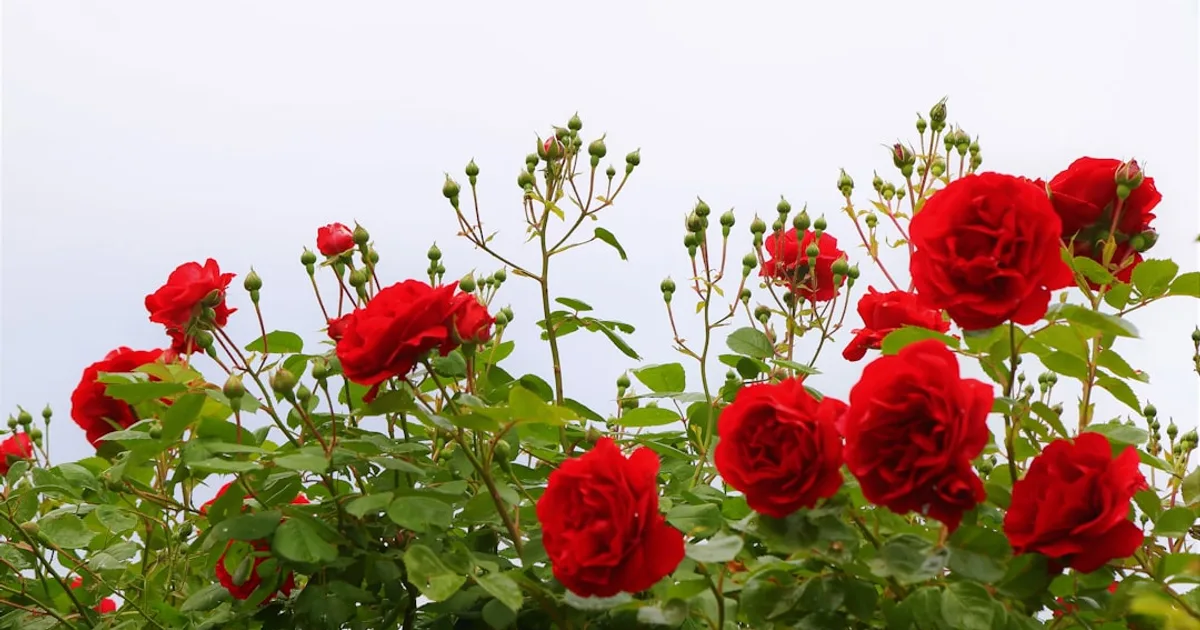
Roses grown in isolation look formal and a little austere. The same rose growing through a cloud of catmint, surrounded by salvias and alliums with a lavender hedge at the front — that looks like a garden someone actually lives in. Companion planting with roses isn't a new idea, but the reasoning behind which plants to choose is worth understanding rather than just following a list.
Good rose companions do one or more of three things: they look right together, they contribute something practical (pest deterrence, soil improvement, beneficial insect attraction), or they extend the season so the bed has interest before and after the roses peak. The best companions do all three.
Lavender
The most classic rose companion and the most justified. Lavender and roses share similar requirements — full sun, good drainage, alkaline to neutral soil — which means they thrive in the same conditions rather than competing. The silvery-grey foliage of lavender provides contrast against rose leaves year-round, not just when both are flowering. The purple flowers complement almost every rose colour from deep red to pale pink to white.
Practically, lavender attracts pollinators in large numbers, which benefits the whole garden. Its strong scent is thought to confuse or deter aphids — the same pests that plague cucumbers, as we cover in our guide to getting rid of aphids — though the evidence for lavender's deterrent effect is more anecdotal than scientific. What's less debated is that a lavender-edged rose bed looks composed and intentional in a way that a rose bed without underplanting often doesn't.
Use compact varieties like Hidcote or Munstead as an edging plant rather than larger varieties that will eventually swamp smaller roses. Trim lavender hard after flowering to keep it from becoming woody and leggy.
Catmint (Nepeta)
If lavender is the classic choice, catmint is the more relaxed one. It sprawls slightly, billows at the front of a border, and produces soft blue-purple flowers that complement roses with a looseness that the more upright lavender doesn't. It flowers in late spring to early summer — timing that bridges the gap before many roses reach peak bloom — and if cut back by half after the first flush will flower again in late summer.
Nepeta 'Six Hills Giant' is vigorous enough to hold its own against larger shrub roses. 'Walker's Low' is more compact and better suited to smaller spaces. Both are reliably perennial, low-maintenance, and attractive to bees.
The practical case for catmint is similar to lavender — strong-scented foliage that may deter some pests, and flowers that attract beneficial insects. The aesthetic case is arguably stronger: there are few more pleasing combinations in a garden than a repeat-flowering pink or red rose rising out of a mound of catmint in full flower.
Alliums
Alliums — ornamental onions — are the companion that surprises people who haven't tried them. Large purple globes on tall stems rising through and above rose foliage in late May and June add a vertical, architectural element that most perennials can't provide. The combination of a rose that hasn't yet fully opened with the dramatic spheres of Allium 'Globemaster' or 'Purple Sensation' is genuinely striking.
The practical case is stronger than for most companions. Alliums are members of the onion family, and their sulphur compounds are a genuine pest deterrent — more than mere anecdote, and worth pairing with the hands-on removal methods in our aphid control guide when infestations do appear. Blackfly and aphids are less enthusiastic about plants growing near alliums. This is companion planting that has some actual evidence behind it.
Plant allium bulbs in autumn, positioning them where they'll grow up through rose foliage so the fading allium leaves — which are not attractive — are hidden by the rose. The dried seed heads of alliums are also worth leaving on the plant: they remain decorative well into summer and attract birds.
Salvias
Hardy salvias have become one of the most useful plants in the border over the past decade, and they work particularly well with roses. The deep blue-purple of Salvia nemorosa varieties — 'Caradonna', 'Ostfriesland', 'May Night' — provides one of the best colour contrasts available against pink, red, or white roses.
They flower at roughly the same time as first-flush roses, creating combinations that photograph well and look better in person. Cut back after the first flowering and they'll produce a second flush that coincides with late summer repeat-blooming roses.
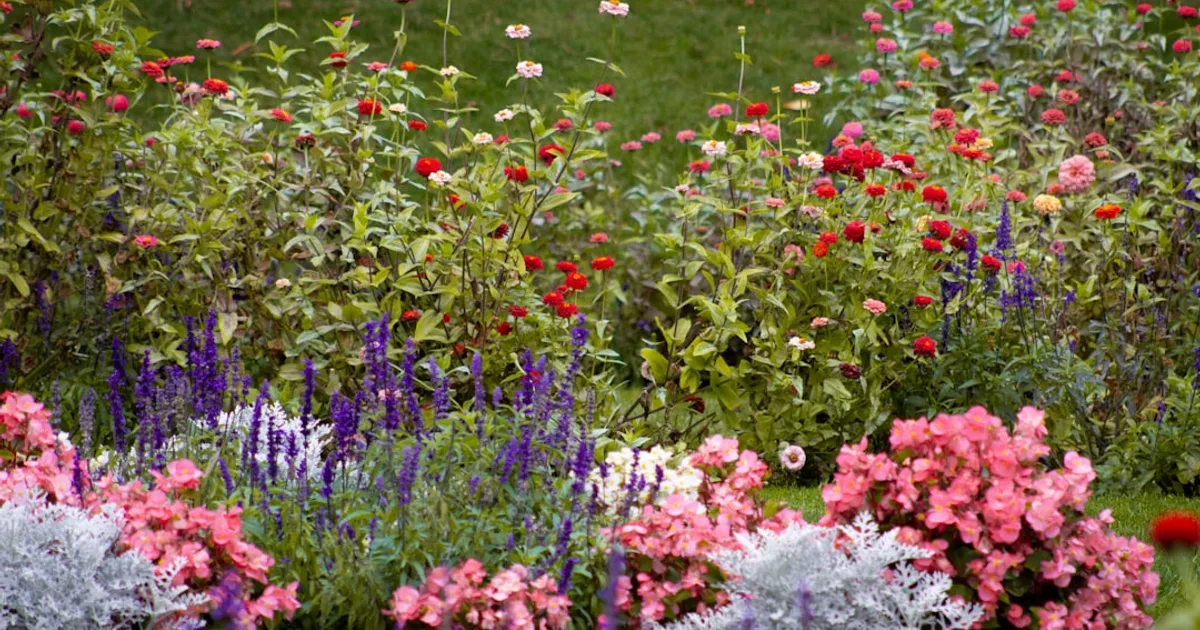
Salvias are drought-tolerant once established, so they don't compete aggressively with roses for water. They're also attractive to bees and other pollinators, particularly bumblebees which are important rose pollinators. The aromatic foliage provides some pest deterrence.
For larger spaces, the woody salvias — Salvia 'Hot Lips', 'Amistad' — add more height and bulk. For the front of a border, the compact nemorosa types are better scaled.
Geraniums (hardy, not pelargoniums)
Hardy geraniums — the perennial cranesbills, not the tender bedding plants — work as ground cover beneath roses, suppressing weeds and creating a carpet that transitions between rose stems and whatever edging is at the front of the bed. Geranium 'Rozanne' flowers from early summer until autumn with minimal attention. Geranium macrorrhizum is semi-evergreen and tolerates dry shade, making it useful under larger shrub roses where soil moisture is limited.
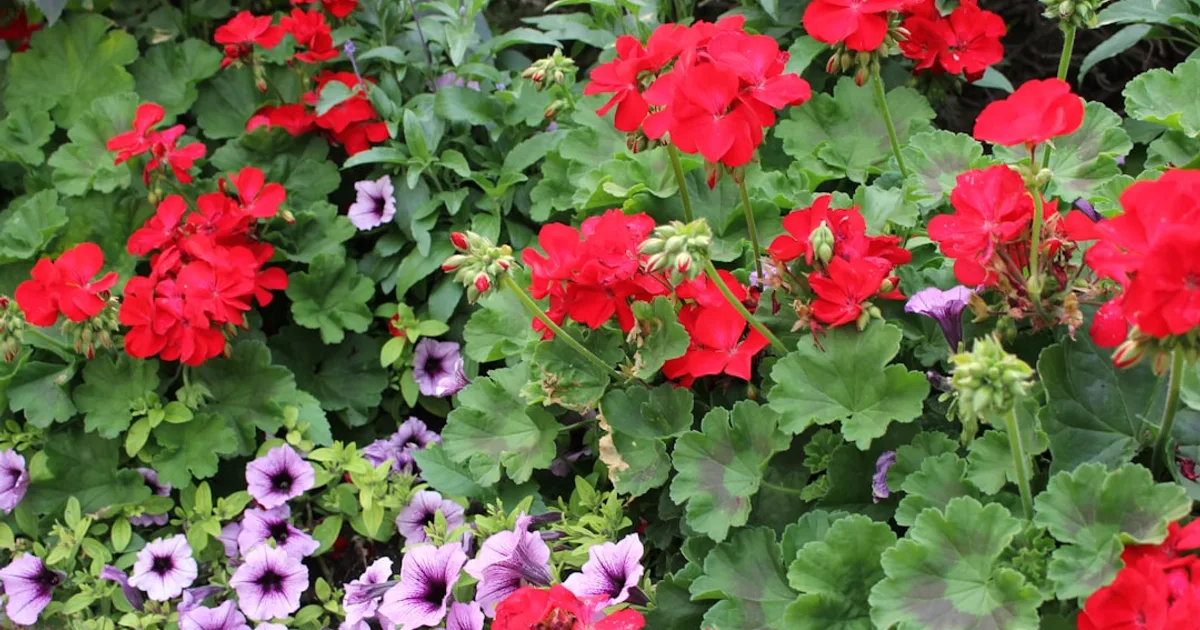
These are not flashy plants. They don't compete with the roses visually. That's exactly the point — they hold the ground, look tidy, and let the roses be the centre of attention.
What about garlic?
Garlic planted among roses appears in almost every companion planting list and the theory is plausible — the sulphur compounds deter fungal disease and aphids. The reality is more mixed. Garlic takes up space in a border that you might want for more ornamental plants, it needs to be replanted each year, and the evidence that it reduces blackspot (the main fungal rose disease) in garden conditions is not strong.
If you grow garlic anyway, planting some near roses costs nothing extra and may provide marginal benefit. Resist the garden-centre urge to buy every companion plant on the first visit — the same impulse-buying discipline that helps at the supermarket applies when you're standing in front of a tray of lavender starts. Building your rose management around garlic as a disease preventative rather than proper air circulation and good hygiene is misplaced confidence.
What to avoid
Fennel is sometimes suggested as a companion but it's allelopathic — it inhibits the growth of many plants, including roses, through chemical compounds released from its roots and foliage. Keep it well away from roses and most other vegetables and flowers.
Large perennials that compete aggressively — miscanthus grasses, large asters, tall persicarias — can overwhelm roses, particularly shrub roses, if positioned too close. The competition for water and nutrients, combined with reduced air circulation, creates exactly the conditions that encourage blackspot and other fungal issues — the same reason healthy soil enriched with home compost matters for rose beds long-term.
Annuals that require frequent disturbance are poor companions for roses because replanting them each year disturbs the shallow feeder roots that roses develop at the surface. Perennial companions that can be left undisturbed are almost always better.
Putting it together
The most successful rose companions are chosen with the specific rose in mind — its height, its flowering period, its colour, and the conditions it's growing in. A large, once-flowering climbing rose on a wall needs different companions than a compact repeat-flowering hybrid tea in a formal bed.
As a starting point that works in most situations: lavender or catmint at the front, salvias in the middle ground, and alliums rising through the rose foliage in late spring. That combination provides interest from April through October, attracts beneficial insects, contributes some pest deterrence, and looks genuinely beautiful at peak flowering — the kind of weekend project that pairs well with a short domestic getaway when the garden is established enough to leave for a few days. The rest is refinement.


