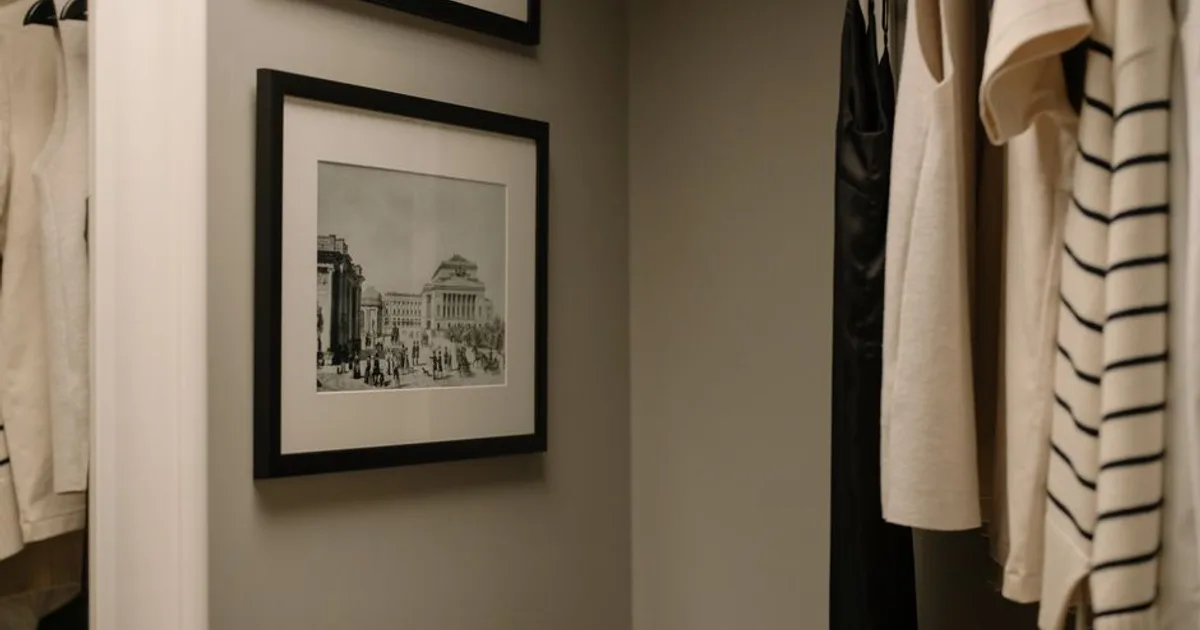
Clothes don't just wear out from being worn. They deteriorate from being stored badly — hung when they should be folded, packed in plastic when they need to breathe, crammed into spaces that trap moisture and invite pests. The damage is slow, invisible for months, then suddenly obvious: stretched shoulders, yellow stains, moth holes, mildew smell.
Proper storage isn't complicated, but it is specific. Different fabrics have different needs. Seasonal storage has different rules than daily use. The wrong approach doesn't just fail to protect clothes — it actively destroys them.
The fundamental choice: hanging versus folding
Not every garment benefits from hanging. Not every garment benefits from folding. Getting this wrong causes predictable damage.
Hanging works for structured garments: blazers, suit jackets, coats, dress shirts, dresses. These items need to maintain their shape, and hanging allows the fabric to drape naturally. The structure of the garment — padded shoulders, tailored seams, stiff interfacing — supports itself on a hanger without distortion.
Folding works for unstructured garments: knitwear, t-shirts, heavy sweaters, casual trousers. These items have no internal structure to maintain shape. Hanging them creates stress points — typically at the shoulders — where the weight of the fabric pulls downward. Over time, this stretches the fabric into shapes it was never meant to hold. A heavy wool sweater hung for a season develops shoulder bumps that never fully recover.
The test: does the garment have structure that supports its own weight? If yes, hang it. If no, fold it.
Some items fall in between. Lightweight cotton shirts can go either way. Soft dresses without heavy embellishment can fold without harm. When uncertain, consider the weight of the fabric — heavier garments put more stress on hangers and benefit more from folding.
Hangers matter more than you think
The cheap wire hangers from dry cleaners are actively harmful to clothes. The thin wire creates pressure points that crease and distort fabric. The triangular shape doesn't match human shoulders. Anything hung on wire hangers for extended periods shows the damage.
Wooden hangers are the standard for items that matter. The broad, curved shape distributes weight evenly and matches the natural shoulder line of jackets and shirts. They're sturdy enough for heavy coats. Cedar hangers add the benefit of moth deterrence.
Padded hangers suit delicate items — silk blouses, fine knitwear that must hang, items with embellishment that could snag. The padding prevents creasing and the fabric surface prevents slipping.
Velvet-flocked hangers work for lightweight items that slip off smooth hangers. They're thin enough to save closet space. But they lack the structure for heavy items and shouldn't be used for suits or coats.
The investment in proper hangers pays back in clothes that maintain their shape. One set of wooden hangers lasts decades and prevents damage that would cost more to replace than the hangers cost to buy.
For trousers, clip hangers or hangers with bars work better than draping over a regular hanger, which creates a crease at the fold point. Hang trousers from the cuffs if using clips — gravity pulls the crease down the leg rather than across the thigh.
Seasonal storage: the high-risk period
Clothes stored for months at a time face risks that daily-wear clothes don't. The extended period without light or air creates conditions where damage accumulates undetected.
The first rule of seasonal storage: everything must be clean. Stains that seem invisible can oxidise over months of storage, becoming permanent. Body oils and sweat residue attract insects. Food particles become food sources for pests. Treating any stains and washing or dry cleaning everything before storage prevents problems that would otherwise ruin stored garments.
The second rule: everything must be completely dry. Even slight moisture trapped in fabric during storage becomes mildew. Mildew stains, smells, and weakens fibres. The damage is often irreversible. If clothes were recently washed, give them an extra day to air before packing away.
Location matters. Attics get too hot. Basements get too humid. Both extremes damage fabric — heat degrades fibres, humidity invites mildew and mould. The ideal storage location is climate-controlled: interior closets, under-bed storage in climate-controlled rooms, or dedicated storage areas that maintain consistent temperature and humidity.
If climate-controlled storage isn't possible, take precautions. In humid environments, add silica gel packets to storage containers. In variable-temperature environments, avoid sealed plastic that traps condensation during temperature swings.
The plastic problem
Plastic garment bags, plastic bins, and vacuum bags have specific uses — and specific failures when used incorrectly.
Plastic garment bags trap humidity. This is catastrophic for natural fibres, which need air circulation to stay healthy. A wool suit stored in a plastic dry cleaner bag for six months can emerge yellowed, smelling of mildew, or with weakened fibres. The bag that seemed protective became a humidity trap.
For hanging storage, breathable garment bags — cotton, canvas, or specifically designed breathable materials — protect from dust without trapping moisture. These are the correct choice for suits, coats, and formalwear in closets.
Plastic bins work for folded items, but only with precautions. The bin must be truly airtight to keep pests out. But airtight also means moisture-trapping, so items must be bone dry and silica gel packets should be added. Clear bins allow inspection without opening. Opaque bins require labelling.
Vacuum-seal bags have a legitimate use case: maximising space for items that tolerate compression. This includes bedding, out-of-season casual clothes, and sturdy synthetic fabrics. They save enormous space and, when properly sealed, keep pests and moisture out.
But vacuum bags destroy certain items. Down-filled jackets and puffy coats lose loft when compressed — the insulation may not fully recover. Leather and suede crack when compressed long-term. Delicate fabrics with embellishments can be crushed permanently. Items with structure — blazers, tailored coats — lose their shape. For these items, vacuum bags cause exactly the damage storage is supposed to prevent.
The rule: vacuum bags for sturdy, unstructured items only. Everything else needs breathing room.
Moths: the hidden destroyer
Clothes moths are a genuine threat to wool, cashmere, silk, and other natural fibres. The damage is slow and invisible until it's severe — small holes that seem to appear from nowhere, entire sections of fabric suddenly weakened.
The moths themselves don't eat fabric. Their larvae do. A female moth lays eggs in quiet, dark, undisturbed places — exactly the conditions found at the back of a closet or inside a storage box. The larvae hatch and feed on protein-based fibres, preferring dirty fabric over clean because body oils and food residue add nutrition.
Prevention starts with cleanliness. Moths prefer soiled fabric. Washing or dry cleaning natural-fibre garments before storage removes the residue that attracts them.
Cedar is the traditional deterrent. Cedar oil disrupts moth reproduction and repels adult moths from laying eggs. Cedar blocks, rings, or chips placed in closets and storage containers provide ongoing protection. The cedar must be sanded or refreshed with cedar oil periodically — once the surface oxidises and the smell fades, the protective effect diminishes.
Lavender, rosemary, and clove also deter moths, though less effectively than cedar. Sachets of dried herbs placed among stored clothes provide some protection and smell better than chemical alternatives.
Mothballs work but come with significant drawbacks. The chemicals — naphthalene or paradichlorobenzene — are toxic. Clothes stored with mothballs absorb the smell, which is difficult to remove. The chemicals can yellow white fabrics. For most household storage, natural alternatives are sufficient and safer.
If moths do establish in a closet, the response must be thorough. Inspect every garment for larvae and damage. Freeze affected items for 72 hours — this kills larvae and eggs. Clean the closet completely, including vacuuming crevices where eggs may hide. Wash or dry clean every item that may have been exposed. Add cedar and monitor for reinfestation.
Humidity control
Humidity is the quiet enemy of stored clothes. High humidity promotes mildew and creates conditions moths prefer. Low humidity dries out leather and makes some fabrics brittle.
The ideal range for clothing storage is 40-50% relative humidity. This is low enough to prevent mould and mildew but high enough to keep natural fibres from drying out.
In humid climates or seasons, dehumidifiers in storage areas protect against moisture damage. For enclosed storage — bins, boxes, closet corners — silica gel packets absorb excess moisture. These can be recharged by drying in an oven and reused indefinitely.
In dry climates, leather and suede need occasional conditioning to prevent cracking. Items stored long-term in very dry conditions may benefit from humidity packs (used for cigars or musical instruments) to maintain minimal moisture.
Signs of humidity problems: musty smell, visible mould spots, white residue on leather, fabric that feels damp or clammy. Address immediately — air out affected items, treat any mould, and improve storage conditions before returning clothes.
Caring for specific fabrics
Different materials have different vulnerabilities. Storage should account for the specific needs of what you're storing.
Wool is moth-attractive, breathes, and can felt or shrink if stored improperly. Always store clean, with cedar protection, in breathable containers or hanging bags. Fold rather than hang heavy knits. Organising wool items thoughtfully in limited closet space means keeping them accessible enough to inspect periodically.
Silk is strong but vulnerable to light, humidity, and pressure. Store silk in acid-free tissue paper, away from direct light. Don't store in plastic, which traps moisture. Silk doesn't attract moths as strongly as wool but is still vulnerable — include cedar or lavender protection.
Leather needs to breathe and maintain some moisture. Never store in plastic. Use breathable dust bags or cotton pillowcases. Stuff bags and shoes with acid-free paper to maintain shape. Condition before long-term storage. Store away from heat sources, which dry leather and cause cracking.
Cotton is relatively forgiving but can yellow in improper storage. Store clean — body oils left in cotton oxidise to yellow stains over time, especially on white items. Avoid plastic bags that trap moisture. Cotton can be vacuum-packed for space savings without damage.
Synthetics are generally the most storage-tolerant. They don't attract moths, resist moisture damage, and tolerate compression. However, avoid storing in direct sunlight even through windows — UV degrades synthetic fibres over time.
Denim stores easily but stiff, raw denim can crack at fold lines if stored too tightly folded for too long. Roll rather than fold when possible, or refold periodically to prevent permanent creasing.
Down jackets need special handling. Store hung or loosely packed — never compressed long-term, which destroys loft. Use breathable garment bags. Ensure completely dry before storage to prevent mildew in the down filling.
Daily storage habits
Seasonal storage gets attention, but daily storage habits matter more for the clothes worn regularly.
Don't return worn clothes immediately to the closet. After wearing, let garments air briefly before putting them away. This allows moisture from body heat to evaporate and gives odours a chance to dissipate. A hook behind the door or a valet stand serves this purpose.
Give shoes time to dry between wears. Rotating between at least two pairs prevents moisture buildup that degrades leather and creates odour. Shoe trees — cedar is ideal — absorb moisture and help shoes maintain shape.
Keep closets clean and dry. Vacuum periodically to remove dust and lint that attract pests. Don't let dirty laundry accumulate in or near the closet — it attracts moths and transfers odours.
Proper washing extends garment life, but so does proper storage between washings. The combination of good cleaning and good storage habits keeps clothes in wearable condition far longer than either habit alone.
Practical storage solutions
Storage success depends partly on having the right containers and tools.
Breathable garment bags for suits and formalwear. Canvas or cotton, not plastic.
Cedar products for wool and silk protection. Blocks, rings, or chips — replenish or sand the surface annually to maintain effectiveness.
Acid-free tissue paper for wrapping delicates and stuffing structured items.
Clear plastic bins with tight-sealing lids for folded casual clothes in seasonal storage.
Silica gel packets for enclosed storage in humid conditions.
Good hangers — wooden for suits and coats, padded for delicates, appropriate shapes for specific garments.
Shoe trees for good leather shoes.
A small hygrometer to monitor humidity in storage areas, if conditions seem variable.
None of these items is expensive. All of them protect against damage that would cost more to replace than the storage solutions cost to buy.
Indicators that storage has failed
Some signs that current storage methods need changing:
Musty or mildew smell when opening closet or storage containers — humidity is too high.
Yellow staining on white or light fabrics — items weren't cleaned properly before storage, or stored in plastic that trapped moisture.
Small holes in wool or silk — moths have established. Immediate action required.
Stretched or misshapen shoulders on knitwear — items were hung that should have been folded.
Creases that don't release — items were packed too tightly.
Leather that's stiff, cracked, or has white residue — conditions were too dry, or leather wasn't conditioned.
Catching these problems early limits damage. Regular inspection of stored items — even a quick look every few months — identifies problems before they ruin entire wardrobes.
Storage isn't glamorous. It doesn't get the attention that shopping or styling does. But a wardrobe full of damaged clothes from poor storage isn't a wardrobe at all — it's waste. The habits that preserve clothes are simple. Apply them consistently, and the clothes that matter will last as long as you want them to.