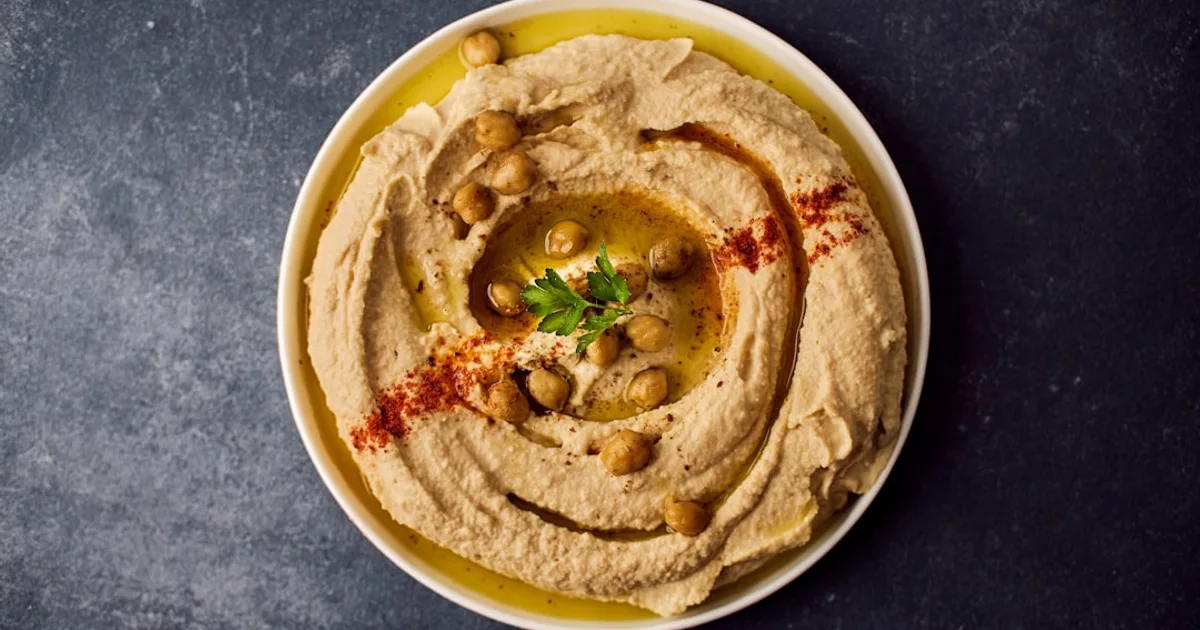
Shop-bought hummus is fine. Homemade hummus made properly is in a different category — smoother, fresher, more flavourful, and customisable in a way that a plastic tub never is. The barrier to making it is almost nothing: a tin of chickpeas, a food processor, and five minutes.
The reason most homemade hummus disappoints is not the recipe. It's the tahini quality and one skipped step.
The ingredients that matter
Chickpeas: A 400g tin, drained but with the liquid reserved. The liquid — aquafaba — is useful for adjusting consistency later. Don't throw it away until you're done.
Tahini: This is where most homemade hummus fails. Cheap tahini is bitter and grainy. Good tahini is smooth, nutty, and slightly sweet. Brands worth using: Belazu, Al Nakhil, Soom, Whole Foods 365. If your hummus has ever tasted bitter or chalky, the tahini is almost certainly why — and it's one of the staples worth buying well when you shop groceries smarter, not cheaper. Use more than you think — a generous amount of good tahini is what makes hummus taste like hummus rather than blended chickpeas.
Lemon juice: Fresh, not bottled. The difference is significant — bottled lemon juice has a metallic edge that fresh doesn't.
Garlic: One small clove, raw. Raw garlic is sharp; if you want a milder flavour, roast it first or just use less.
Ice water: The step most recipes skip and the one that makes the biggest textural difference.
Olive oil, cumin, salt.
The ratio
For one tin of chickpeas (400g drained weight approximately 240g):
- 3 tablespoons tahini
- Juice of one lemon
- 1 small garlic clove
- 2–3 tablespoons ice water
- Pinch of cumin
- Salt to taste
- Olive oil to finish
The method
Blend the tahini and lemon juice together first, without the chickpeas. Blend for a full minute until the mixture lightens in colour and becomes creamy. This step — emulsifying the tahini with acid before adding anything else — is what produces a smooth, light hummus rather than a dense one. Most recipes skip it and add everything together. Don't.
Add the garlic and a pinch of salt. Blend briefly.
Add the drained chickpeas. Blend for two minutes. The mixture will be thick and slightly grainy at this point — that's fine.
With the processor running, add ice water a tablespoon at a time. The cold water and the mechanical action together produce the smooth, almost whipped texture that distinguishes good hummus. Blend for another minute after adding the water. Taste and adjust — more lemon, more salt, more tahini.
Transfer to a bowl. Make a well in the centre with the back of a spoon, drizzle with good olive oil, add a pinch of paprika or sumac and a few whole chickpeas if you want it to look like something. Serve with warm homemade bread or as a side to weeknight chicken.
Total time from opening the tin: under five minutes if your food processor is already out.
Why it tastes better than shop-bought
Commercial hummus is made to a shelf life and a price point. The tahini quantity is reduced, preservatives extend the life, and the flavour is calibrated to be inoffensive rather than distinctive. Homemade hummus has none of these constraints — you use as much tahini as it needs, eat it fresh, and adjust to your own taste.
The freshness is the main thing. Hummus is best on the day it's made. It keeps in the fridge for three to four days but loses some brightness by day two.
Variations worth trying
Roasted red pepper: Add one jarred roasted red pepper with the chickpeas. Slightly sweet, works well with the cumin.
Roasted garlic: Roast a whole head of garlic, squeeze out the cloves, use instead of raw. Milder and sweeter, better for people who find raw garlic too sharp.
Extra lemon: Double the lemon juice for a sharper, more acidic hummus that works well as a sauce for grilled meat or fish — or alongside perfectly cooked rice for a complete plate in under twenty minutes.
No tahini: If you don't have tahini, it's technically not hummus but blended chickpeas with lemon and garlic are still worth making — lighter in flavour, a different thing but not a bad one.
The five-minute claim is real. The part that takes time is getting the food processor out and washing it up — about the same commitment as whipping up a 15-minute pasta sauce. The actual making is faster than going to the shop.


