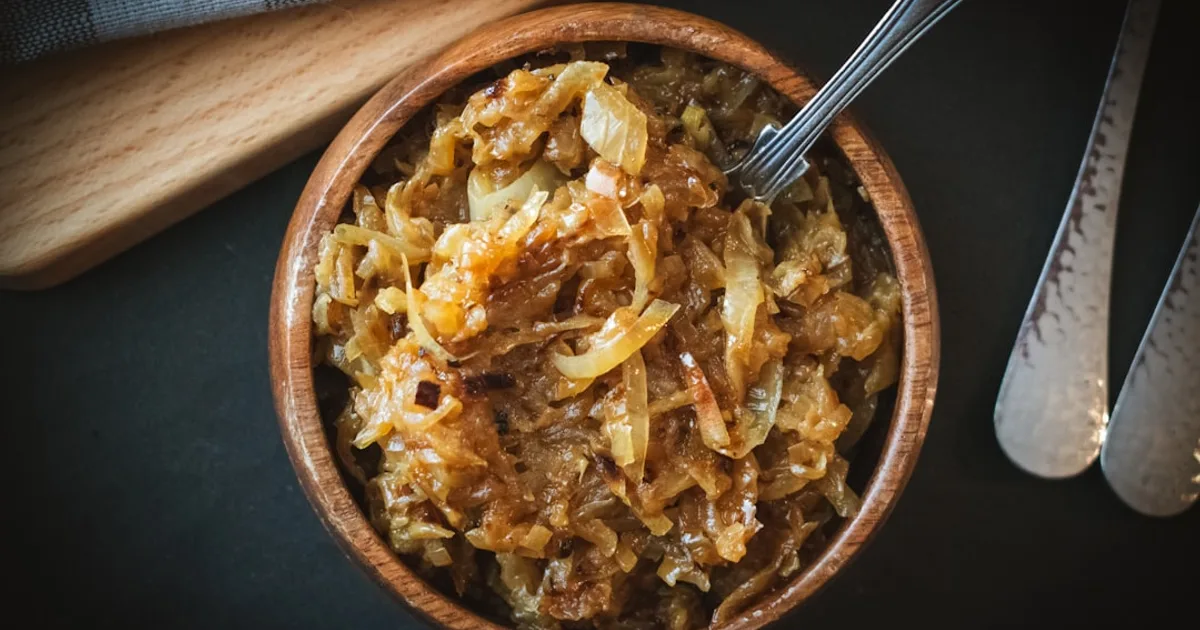
Most recipes that promise caramelized onions in 10 or 15 minutes are describing softened, browned onions — which are good, but not the same thing. Real caramelization is a slow chemical process, and there's no reliable way to rush it without sacrificing the result. Understanding why takes the mystery out of the process and makes the long cooking time feel worthwhile rather than tedious.
What's actually happening
Caramelization is the breakdown of sugars under heat over time. Onions contain natural sugars, and as they cook slowly, those sugars undergo a chemical transformation — first releasing moisture, then breaking down and developing the deep amber colour and complex sweet-savoury flavour that defines properly caramelized onions.
This requires time because it requires moisture to evaporate gradually and sugars to break down gradually. High heat applied quickly browns the outside of the onion through a different reaction (Maillard browning, similar to searing meat) without the sugars having time to fully develop. The result looks caramelized — brown, soft — but tastes more like cooked onion than the deep sweetness of the real thing.
The method
Slice the onions evenly. Halve them, then slice into even strips — not too thin, about 5mm. Uneven slices cook unevenly, with thin pieces burning before thick pieces caramelize.
Use enough fat. A mix of butter and oil — butter for flavour, oil to prevent the butter burning at the higher early heat. About 2 tablespoons combined for 3–4 large onions.
Start with medium heat, not high. This is the most common mistake. High heat browns the outside of the onions quickly while the inside remains undercooked, producing burnt edges and an inconsistent result. Medium heat allows even, gradual cooking — the same patient approach you'd use when softening onions for a 15-minute pasta sauce.
Add salt early. A pinch of salt draws moisture out of the onions, which helps them soften and speeds the early stages of cooking without affecting the final flavor balance.
Stir occasionally, not constantly. For the first 10 minutes, stir every few minutes as the onions soften and begin to release moisture. After that, stir every 5–8 minutes, allowing the onions to sit and develop colour between stirs.
Lower the heat as they progress. After the first 15–20 minutes, when the onions have softened and started to colour, reduce to medium-low. This is where the real caramelization happens — slow, steady cooking that allows sugars to break down without burning.
Deglaze if they start sticking. As moisture cooks off, onions can stick and develop dark spots that taste burnt rather than caramelized. A splash of water, stock, or wine scrapes up the browned bits (fond) from the bottom of the pan and redistributes that flavour through the onions rather than leaving it stuck and burning — the same fond-building logic behind a good improvised soup.
Total time: 40–50 minutes for properly caramelized onions. They should be a deep amber-brown, soft, jammy, and intensely sweet with a savoury depth that bears little resemblance to raw onion. There is no reliable way to compress this into 15 minutes — anything faster is browned, not caramelized.
The baking soda shortcut
Adding a small pinch of baking soda raises the pH of the onions, which accelerates the Maillard browning reaction and can cut cooking time to around 20 minutes. It works, in the sense that it produces brown, soft onions faster.
The tradeoff: baking soda affects texture, making onions softer and slightly mushier than the traditional method, and can introduce a faint soapy aftertaste if too much is used. A very small pinch — an eighth of a teaspoon for a large batch — minimizes this risk while still speeding the process. Worth knowing as an option when time is genuinely short, but it's a compromise, not an equivalent result.
Common problems
Onions are brown but taste bitter: They've burned rather than caramelized — the heat was too high or they were left too long without stirring. There's no fixing burnt onions; the bitter compounds don't cook out. Start again with lower heat.
Onions won't brown after 30 minutes: Heat is too low, or there's too much liquid in the pan preventing proper cooking. Increase heat slightly and let excess liquid evaporate before continuing.
Uneven cooking — some pieces dark, some pale: Slices were uneven, or the pan wasn't stirred enough to redistribute the onions from the hotter centre of the pan to the cooler edges.
What to do with them
Properly caramelized onions are intensely flavoured and a little goes a long way. They're the difference-maker in French onion soup (where they're essentially the entire point), an exceptional addition to grilled cheese with homemade bread, a topping for burgers that elevates the whole thing, and a base for tarts when combined with goat cheese or blue cheese on puff pastry.
They freeze well — make a large batch when you have time and freeze in portions. Having caramelized onions on hand means a 45-minute process becomes a 30-second addition to a weeknight chicken dinner whenever you want that flavour.


