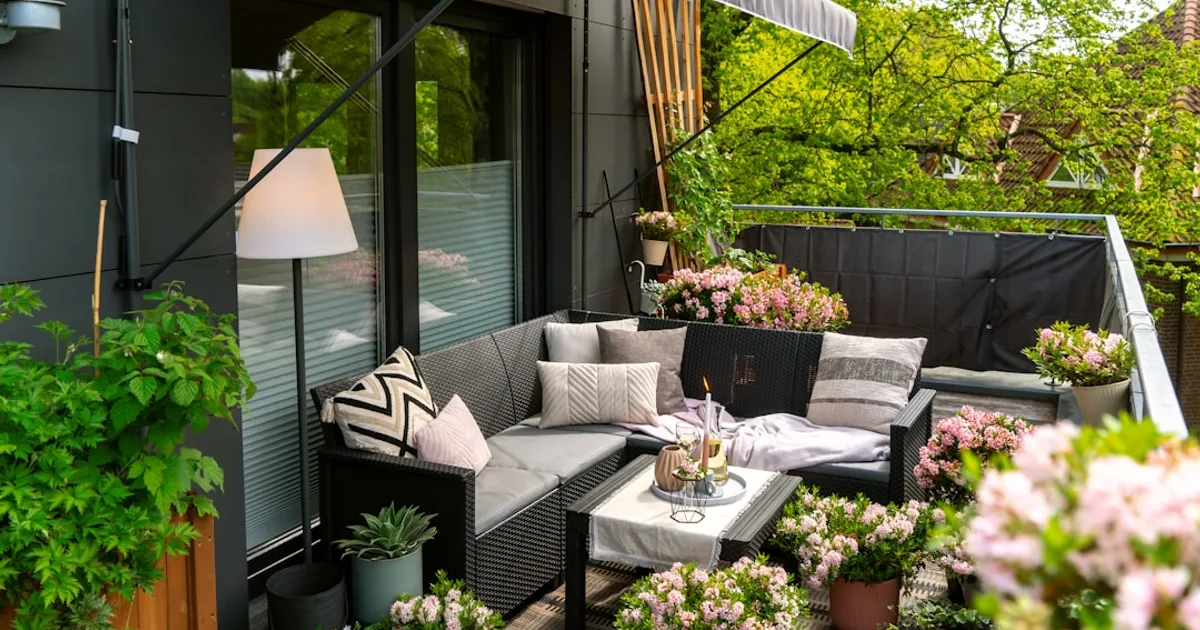
Most balconies are wasted space. A plastic chair, a dead plant, maybe a bicycle that hasn't moved in two years. It's not that people don't want a nice outdoor space — it's that they look at the small square footage, assume it needs serious money to transform, and never start.
It doesn't need serious money. It needs a few deliberate decisions and a willingness to treat the space as a real room rather than a storage overflow zone.
Start by clearing everything out
This sounds obvious but almost nobody does it properly. Take everything off the balcony — everything — and then decide what actually belongs there. That broken sun lounger, the empty pots, the tools you moved outside temporarily two years ago: gone.
You're not working with as little space as you think. Most balconies feel tiny because they're cluttered, not because they're genuinely too small to be useful. A 4 square meter balcony with nothing on it feels like possibility — the same design thinking that makes a small room's wallpaper feel intentional rather than cramped. The same space with accumulated junk feels like a problem.
Clean the floor and walls while you're at it. Pressure wash if you can, or scrub with a stiff brush and soapy water. A clean balcony immediately looks twice the size of a dirty one.
Flooring changes everything for very little money
The single highest-impact change you can make to a balcony is the floor, and it doesn't have to be expensive.
Interlocking deck tiles — the kind that click together over existing concrete or tile — run from about $2–4 per square foot and take an afternoon to lay with no tools. They come in wood-effect composite, real wood, and stone-look finishes. The transformation from bare grey concrete to a wood-toned deck floor is dramatic. It immediately makes the space feel intentional.
Outdoor rugs are the even cheaper version. A weather-resistant outdoor rug layered over whatever floor you have costs $30–80 depending on size and does something similar — it defines the space, adds warmth, and makes it feel like a room rather than a ledge.
Either option, or both together, is worth doing before anything else.
Seating: get this right and the rest follows
A balcony without comfortable seating is just a viewing platform. The seating choice depends on your square footage, but there are good options at every size.
For very small balconies (under 3 square meters), a pair of folding bistro chairs and a small folding table is the classic solution for a reason — it works. When you're not using them, they fold flat against the wall. When you are, it feels like a proper outdoor café. Metal bistro sets in black or white are available for $60–100 and last for years.
For medium balconies, a small loveseat or two-seater outdoor sofa with a low coffee table creates a lounge feel that's genuinely different from the bistro setup — more relaxed, better for spending extended time outside. Look at IKEA's outdoor range, or check Facebook Marketplace for barely-used outdoor furniture at a fraction of retail price.
For larger balconies, the same principles apply — just scaled up. Don't try to fill the space with furniture. Leave breathing room.
One thing that makes a disproportionate difference: cushions. Outdoor furniture without cushions feels like patio furniture. The same furniture with thick, weather-resistant cushions feels like an outdoor living room. Buy the cushions even if the chair is fine without them.
Plants: how to do it without it becoming a chore
Plants make a balcony feel alive in a way that no other element does. They also have a reputation for dying, which puts people off. The secret is choosing the right plants for your specific balcony rather than buying whatever looks nice at the garden center.
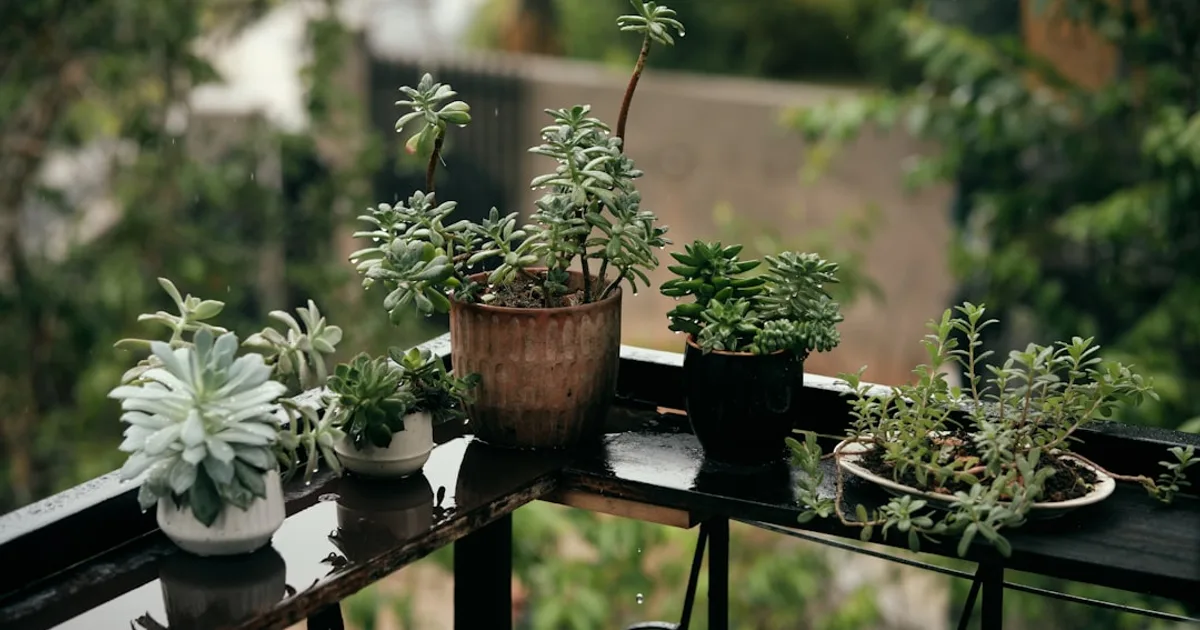
The two variables that matter are sun exposure and wind. A south-facing balcony in full sun needs plants that can handle heat and some drought — lavender, succulents, geraniums, herbs like rosemary and thyme, plus container tomatoes or strawberries if you want edible crops. A north-facing shaded balcony needs shade-tolerant plants — ferns, hostas, begonias, ivy.
Wind is the killer that nobody accounts for. High balconies on tall buildings create wind conditions that will shred anything delicate. Stick to robust, low-growing plants or install a wind screen (more on that below) before investing in anything fragile.
For budget-conscious planting, herbs are the practical choice. A windowbox of basil, mint, and parsley costs almost nothing, looks good, and gets used. Trailing plants like nasturtiums or petunias create vertical interest when grown up a small trellis and cost a few dollars from seed.
Don't buy expensive pots when you're starting out. Terracotta pots are cheap, breathe well, and look good. Spray paint them if you want a specific color. Invest in potting mix quality — good compost makes more difference to plant health than pot aesthetics.
Lighting transforms the evening experience
This is where a lot of balconies fail. They're pleasant during the day and then completely unusable at night because there's no lighting. Fixing this costs almost nothing.
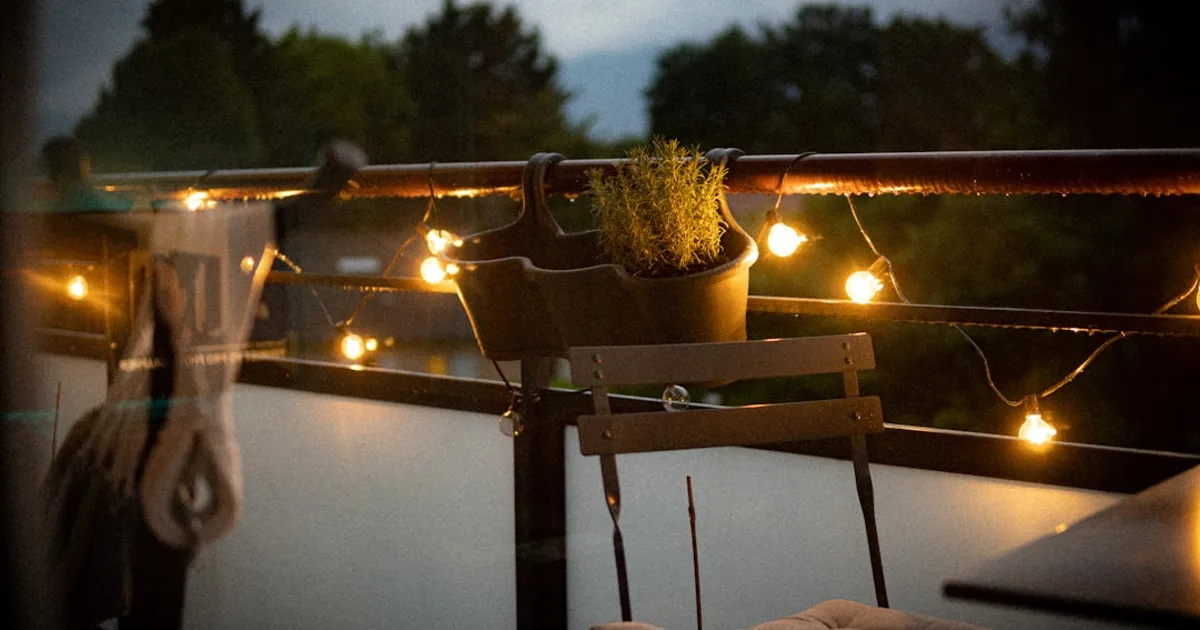
Solar-powered fairy lights strung along a railing or draped overhead create exactly the right ambience for outdoor evening sitting — the same warm, layered lighting approach that makes deep paint colors work indoors. They charge during the day, switch on automatically at dusk, and cost $10–20 for a decent set. String them generously — sparse fairy lights look afterthought; abundant fairy lights look intentional.
A solar lantern or two on the table adds another layer of light that's more practical for actually seeing what you're eating or drinking. LED candle lanterns that flicker realistically are widely available and work well outdoors.
If your balcony has an electrical outlet, a plug-in outdoor lamp with a warm Edison bulb creates the kind of light that makes you want to stay outside longer. The difference between cold overhead apartment light bleeding out onto a dark balcony and warm dedicated outdoor lighting is remarkable.
Privacy and wind: solving both at once
Many balconies feel uncomfortable because they're exposed — overlooked by neighbors, or hit by wind that makes sitting outside unpleasant even on mild days. Plan for watering while you're away before you invest heavily in container planting.
Outdoor privacy screens solve both problems simultaneously. Bamboo roll screens, HDPE privacy panels, or wooden trellis panels attached to the railing block wind at sitting level and create privacy without completely closing off light or air. A balcony that felt exposed and breezy with just a metal railing becomes noticeably more sheltered with a screen attached.
Tall planters positioned at the corners of the balcony serve a similar function more naturally. A tall ornamental grass or a bamboo in a large pot blocks sightlines from neighboring balconies while adding to the planting scheme.
The small details that pull it together
Once the foundations are in place — flooring, seating, plants, lighting — the finishing details make the difference between a balcony that looks like you tried and one that looks like you actually live there.
A small side table for drinks costs almost nothing but makes the space dramatically more functional. A outdoor throw blanket draped over a chair extends the usable season by weeks in either direction. A tray on the table to hold a candle, a plant, and a few small objects creates the kind of deliberate styling that makes a space feel curated.
None of this is expensive. The total cost of transforming a neglected balcony into a genuinely pleasant outdoor room — deck tiles, a bistro set, cushions, plants, fairy lights, a privacy screen — typically comes in well under $300 if you shop carefully. Often under $200.
The return on that investment, in terms of how much more you actually use the space and how it affects the overall feel of your apartment, is out of proportion to the cost. Outdoor space in an apartment is rare and valuable. It's worth treating it like it is.


