The toy industry has a vested interest in convincing parents that development requires products. It doesn't. The most developmentally valuable activities for children aged three to five are almost universally low-tech, cheap or free — the same kind of activities that help families save money every month without buying specialist toys — and involve an adult being present and engaged rather than a screen doing the work.
What three to five year olds are actually developing: language and vocabulary, fine motor skills, basic numeracy and spatial reasoning, emotional regulation, social skills, and the ability to sustain attention. The games worth doing are the ones that work on these capacities without children knowing that's what's happening.
Building and construction play
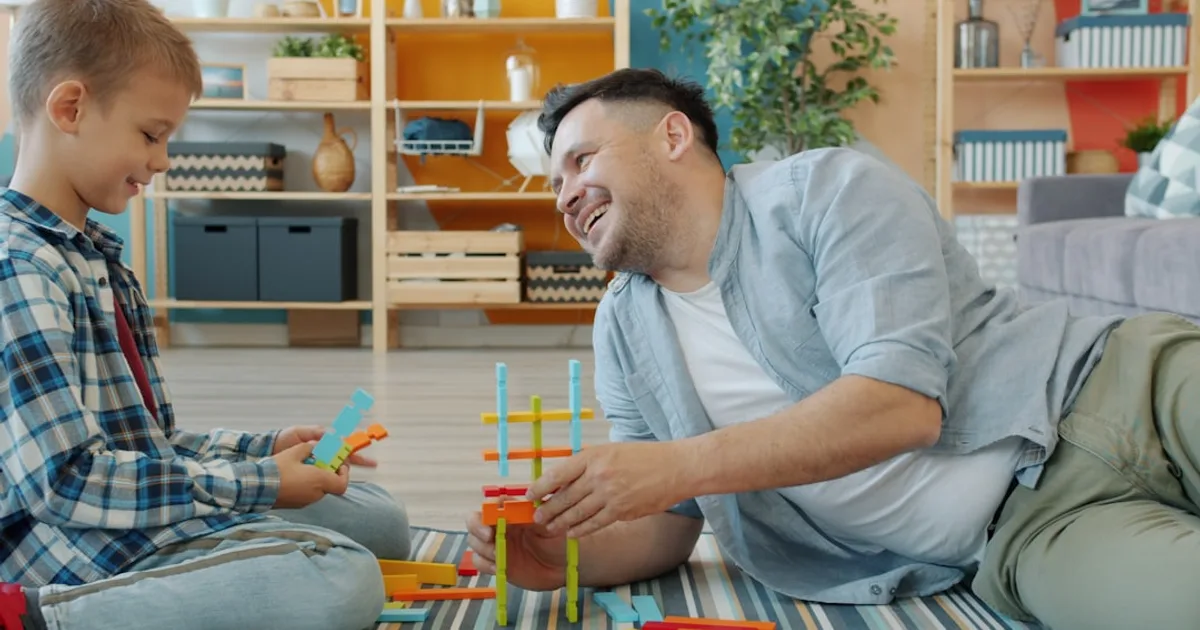
Blocks — wooden unit blocks, DUPLO, magnetic tiles, or even cardboard boxes — are the most consistently valuable play material for this age group. The research on block play and cognitive development is unusually strong for early childhood education: children who engage in more block play show better spatial reasoning, stronger mathematics performance, and improved language skills compared to peers who don't.
What makes block play developmental rather than just play is the problem-solving it requires. Can you build a tower taller than you? Can you make a bridge that a toy car fits under? Can you build an enclosure for these animals? These are engineering challenges that require spatial reasoning, trial and error, persistence through failure, and the satisfaction of a working solution.
Your role as an adult is to narrate, question, and occasionally introduce a gentle challenge — not to build for them or direct what gets built. "I wonder what would happen if you put the bigger block on the bottom" is useful. Rearranging their construction because it's not how you'd do it is not.
Cardboard boxes are underrated in this context. A large appliance box becomes a house, a spaceship, a cave. The open-endedness is the point. Children who have spent an afternoon turning a box into something are exercising creative thinking and problem-solving in ways that pre-formed plastic toys can't replicate.
Sorting and categorising games
This sounds dry. Children find it genuinely engaging when it's done with the right materials and framing.
Empty a bag of mixed dried beans, pasta shapes, or buttons onto a tray. Ask them to sort it however they want — by colour, by size, by shape. Don't impose a method. Then ask them to sort it a different way. This teaches classification thinking, which underpins both mathematical reasoning and scientific thinking. It also develops fine motor skills through the picking up and placing of small objects.
The same principle applies to sorting toys, sorting laundry by colour, organising the sock drawer. Tasks that adults do automatically become learning activities for children who are doing them for the first time and having to develop the mental categories that adults take for granted — the same principle behind teaching money basics through real experiences rather than lectures.
Colour and shape matching games are in this family too. Simple bingo with shapes, matching pairs with homemade picture cards, sorting objects by attribute — all of these build categorisation skills and vocabulary simultaneously.
Imaginative play and role play
Between three and five, imaginative play shifts from parallel play (children playing alongside each other) toward genuinely cooperative play with shared narratives. This is a significant cognitive and social development, and it needs time and space to happen rather than structured direction.
The most valuable thing adults can do for imaginative play is set up the environment and then step back. A box of dress-up clothes. A play kitchen with some real kitchen tools that are safe to use. A set of small world figures — animals, people, vehicles — arranged on the floor. These are invitations to play rather than instructions.
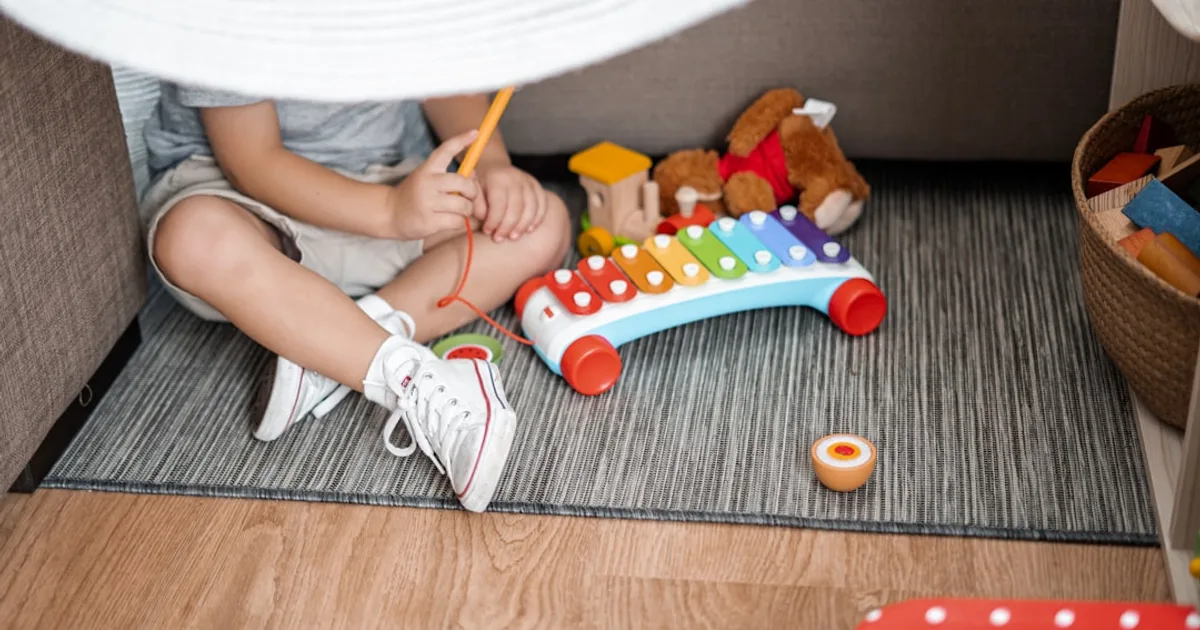
When you do participate, follow the child's lead completely. If you're told you're a dragon and you need to sit in the cave (corner of the room), sit in the cave. The narrative is theirs. Your role is to sustain it by responding authentically rather than redirecting it.
Imaginative play develops language (children narrate continuously while playing), emotional processing (they work through experiences and emotions through the scenarios they create), social negotiation (particularly with other children), and the cognitive capacity to hold a fictional scenario in mind — which is actually an early form of abstract thinking.
Simple card and board games
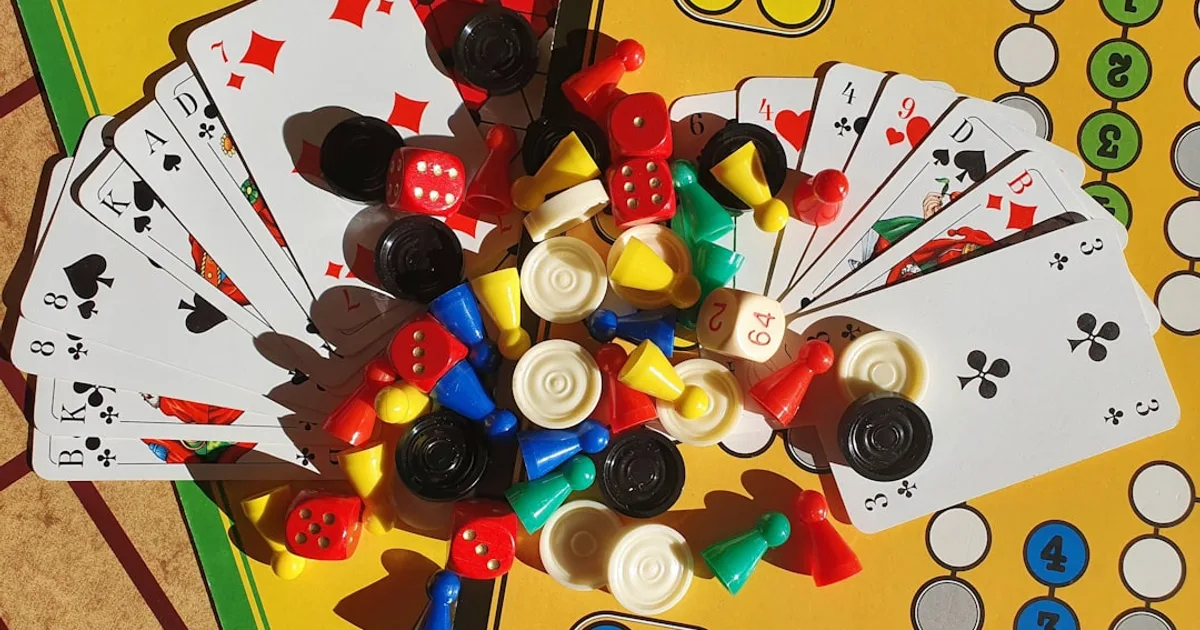
The three-to-five age group can handle simple card games and board games, and these offer something that free play doesn't: explicit rules, turn-taking, and the experience of both winning and losing within a safe, low-stakes context.
Snap. Memory (matching pairs). Simple snakes and ladders. Go Fish. These games are teaching turn-taking, rule-following, number recognition, memory, and — most importantly — how to manage losing without it being catastrophic. The emotional regulation skills developed through repeated experiences of losing a card game are genuine preparation for more significant disappointments later.
Don't let children win. It's a well-intentioned instinct that actually does harm. A child who is always allowed to win doesn't develop resilience or the understanding that effort and luck affect outcomes. Lose gracefully yourself, celebrate their wins honestly, and support them through disappointment without rescuing them from it.
Homemade games are worth making. A simple matching game made by photographing household objects and printing duplicates. A bingo card with drawings of things they know. Children engage more with games they've helped create, and making the game is itself a developmental activity.
Physical games that build body awareness
Gross motor development — balance, coordination, spatial awareness — happens through movement, and three to five year olds need a lot of it. But indoor physical games are less obvious than outdoor ones.
Balance beams made from a strip of masking tape on the floor. Obstacle courses using sofa cushions, pillows, and furniture. Freeze dance — music plays, they dance; music stops, they freeze completely still. Simon Says, which also builds listening skills and impulse control.
Throwing and catching with a large, soft ball develops hand-eye coordination and timing. Rolling a ball back and forth across the floor is the version that works best for younger threes who haven't yet developed the coordination to catch reliably. The repetitive back-and-forth is also a turn-taking exercise and an early form of sustained collaborative attention.
Playdough — either bought or homemade with flour, salt, water, and food colouring — is one of the best fine motor development tools available. Rolling, pressing, cutting with a plastic knife, pushing objects in, building small sculptures — all of this strengthens the hand and finger muscles that children will use for writing. Children who spend significant time with playdough or clay typically find pencil grip easier when they start school — and a calm, screen-free evening routine gives them the rested focus to use those fine motor skills well the next day.
Reading together as a game
Reading aloud to children is the highest-leverage activity in early childhood development for language and literacy — and if you're ready to move beyond read-alouds into formal instruction, our guide to teaching a child to read at home covers what comes next. But it works better as an interactive experience than as a passive one.
Stop and ask questions. What do you think happens next? Why do you think she did that? What would you do? Point to pictures and name what's in them. Ask them to tell you the story from the pictures without you reading the words. These interactions transform reading from an input activity into a language-building conversation.
Let children choose the books, even if you've read the same one forty times. Repetition is how children learn language — they need to hear words in context many times before they're fully acquired. The book you're sick of is often the one teaching them the most.
The point of all of this is not to create a curriculum. It's to be present, to notice what a child is genuinely interested in, and to create conditions for the kind of absorbed, purposeful play that actually develops the capacities they need. An engaged adult and an interesting problem to solve is enough. It always has been.


